
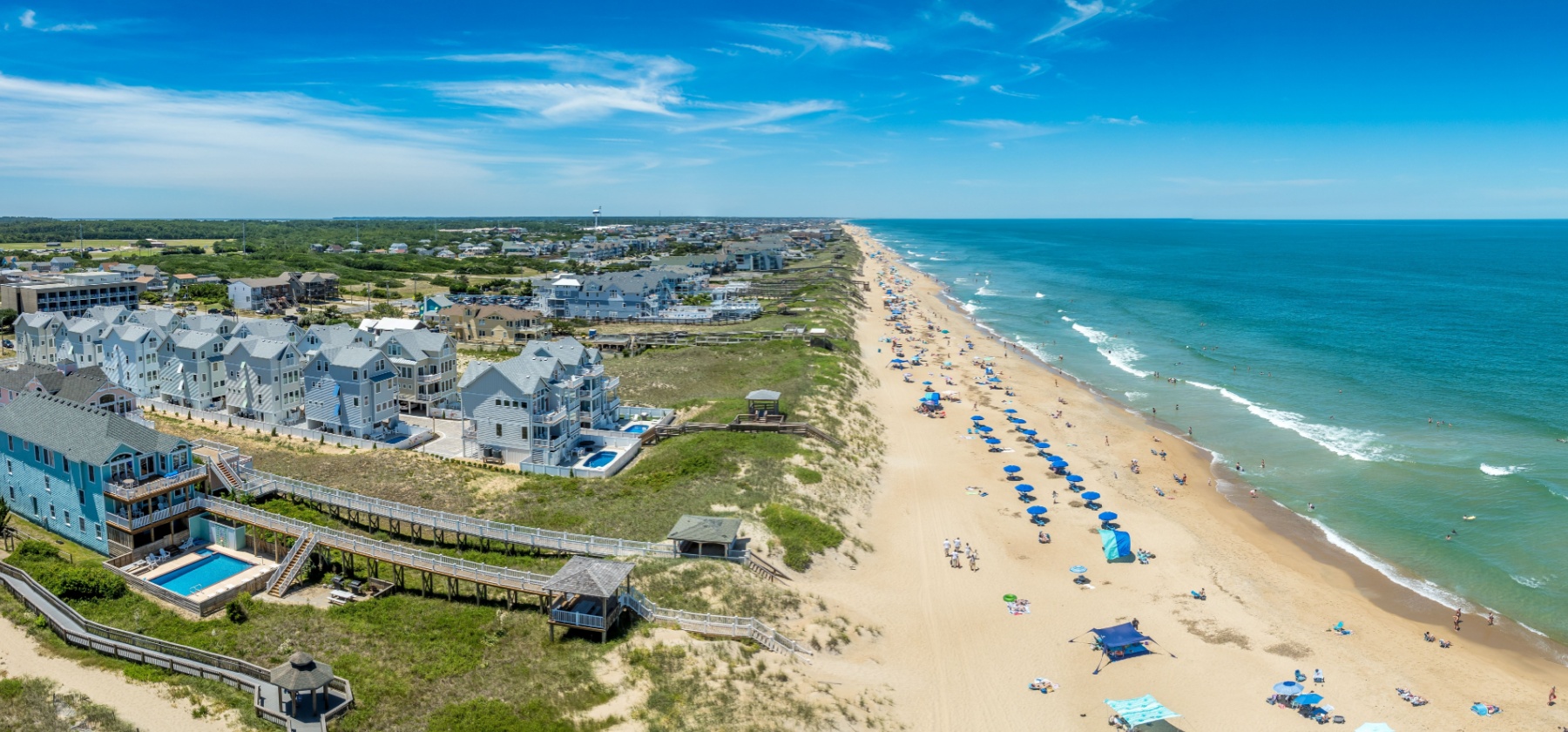
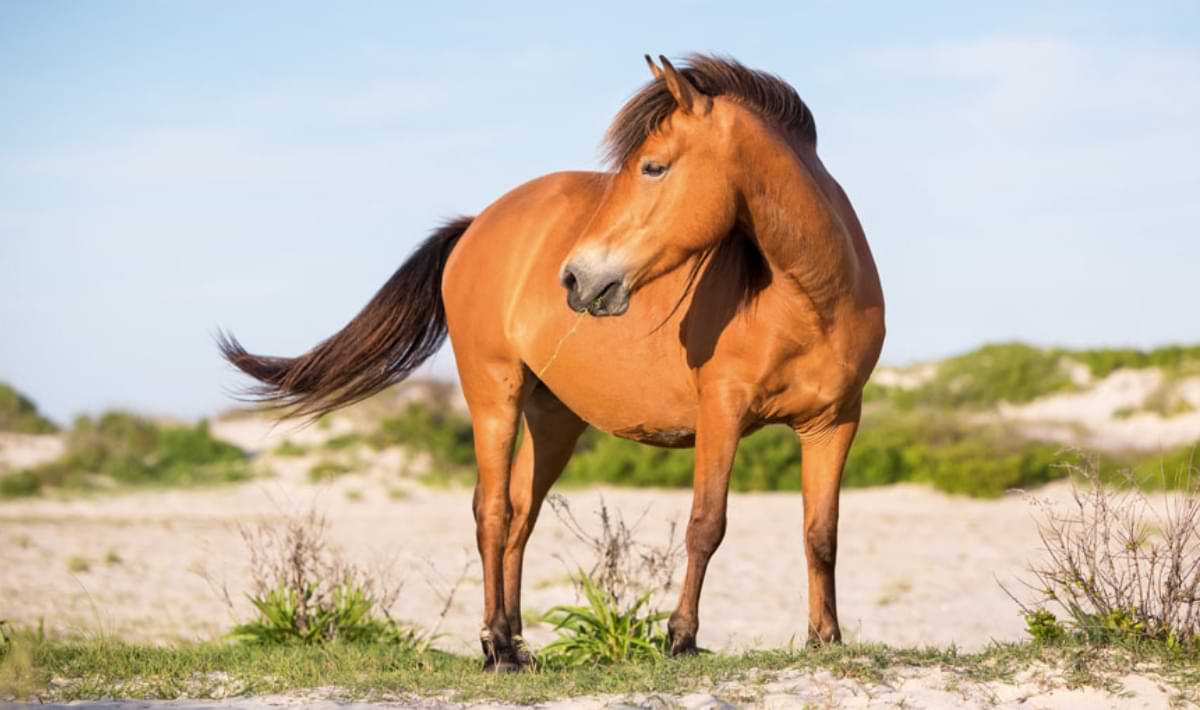
Wild horses roaming empty beaches, centuries of OBX history, off-road adventures through Corolla's dunes, and epic sunrise sightings make seeing the famous Corolla Mustangs one of the Outer Banks' most iconic summer experiences.
There are very few experiences in the Outer Banks more iconic than spotting a wild horse casually walking across the dunes while the Atlantic crashes nearby. For many visitors heading to the OBX during summer, seeing the famous Corolla wild horses sits right at the top of the itinerary, as it should.
In this blog post, I'll share everything you need to know about spotting these captivating creatures in Corolla, including where, how, and the best time to see them, along with a brief history of the wild horses and tips on how to learn more about them and help protect them.
Before we jump into the world of Corolla's famous wild horses, a quick hello from us:
At Village Realty, we're your OBX pros! If you're searching for vacation homes, we've got you covered, and that's just the beginning.
From insider fishing tips to outdoor adventures and local food recommendations, we know the Outer Banks inside and out. For more ideas and inspiration, check out our blog!
A Brief History of the Corolla Wild Horses
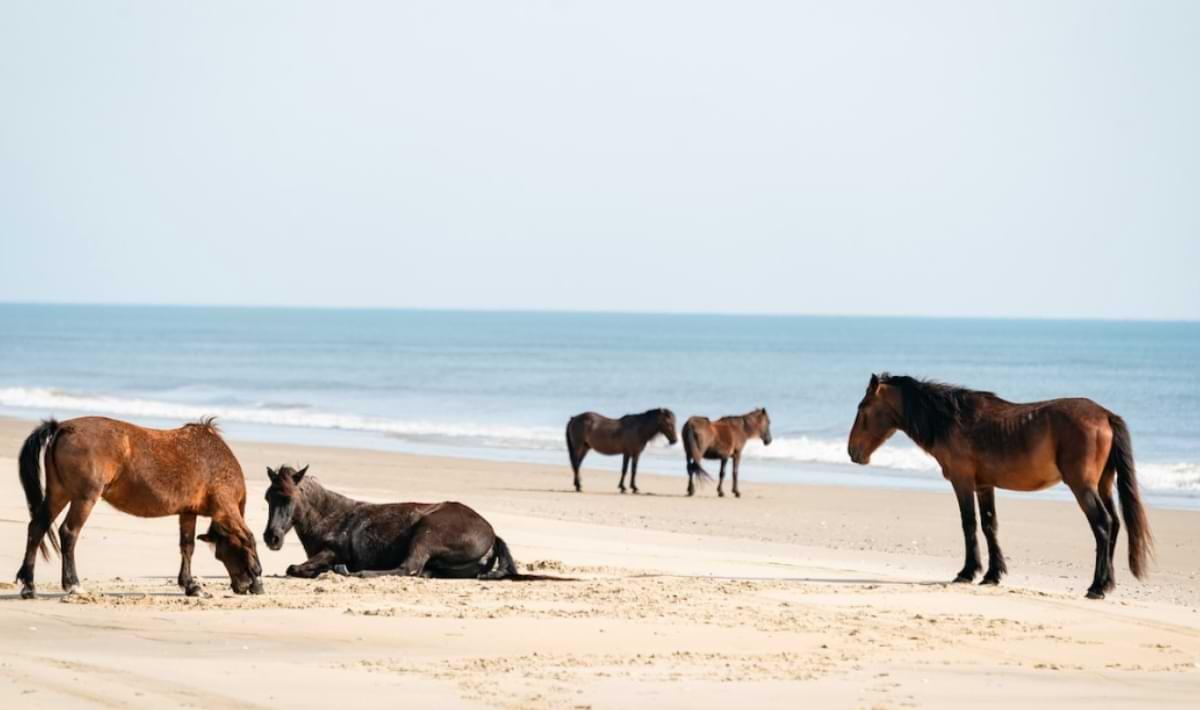
The wild horses of Corolla are believed to descend from Colonial Spanish Mustangs that arrived on the Outer Banks nearly 500 years ago. Historians still debate exactly how they reached the OBX, though. Some theories suggest Spanish explorers brought them during failed colonial expeditions in the 1500s, while others believe the horses survived shipwrecks along the dangerous Diamond Shoals and swam ashore.
Over centuries, these beautiful horses adapted remarkably well to the harsh coastal environment, surviving hurricanes, saltwater conditions, marshes, dunes, and intense summer heat. At one point, thousands of wild horses roamed the OBX, but development and modern roads considerably reduced their numbers over time. In the 1990s, the remaining Corolla herd was relocated farther north into the protected 4WD beaches of Currituck County to help reduce vehicle collisions and preserve the herd's future.
Today, the Corolla wild horses are one of the most iconic symbols of the OBX and were officially named the North Carolina State Horse in 2010.
Where You'll Actually See Them in Corolla
The horses primarily roam the northern 4WD beaches of Currituck County, starting where the paved portion of NC Highway 12 ends in Corolla and stretching north toward the Virginia border. This remote landscape covers roughly 11 miles of beaches, dunes, maritime forests, marshes, and quiet residential stretches deep inside the sand.
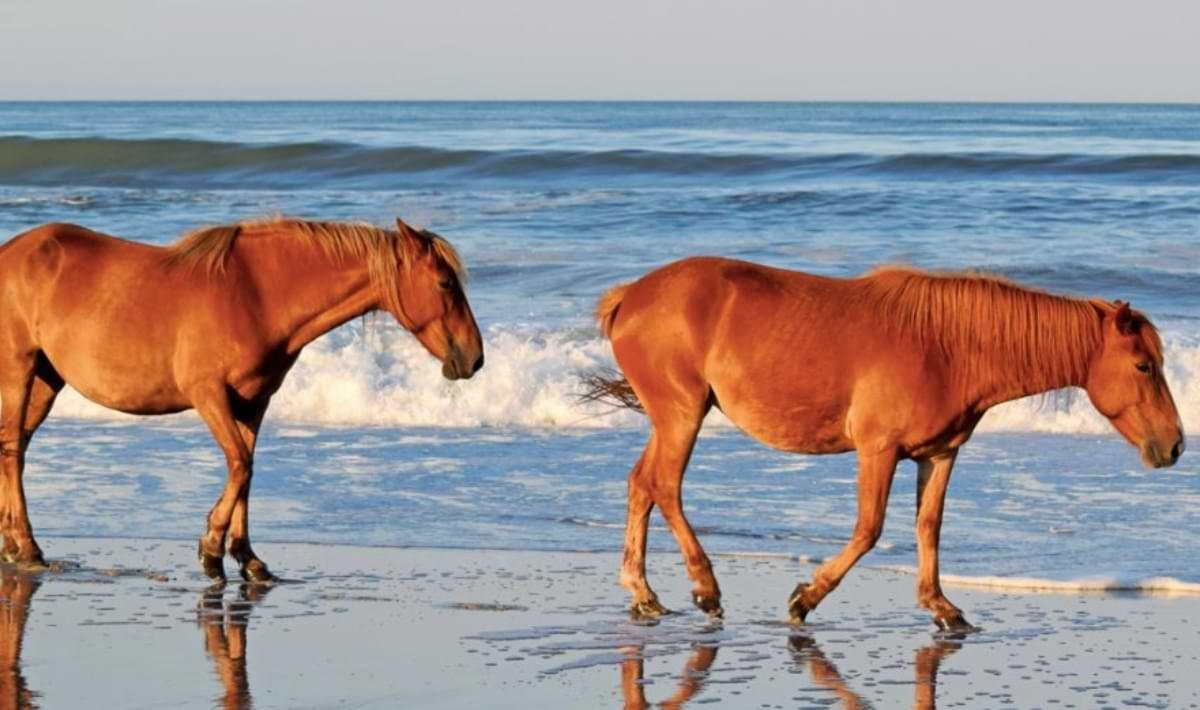
One thing that surprises many first-time visitors is that this is not a controlled wildlife attraction. The horses move freely through the area. Sometimes they stand directly beside the ocean at sunrise. Other times, they wander through beach house neighborhoods, rest underneath live oak trees, or graze near dunes far from the shoreline. In other words, it's a truly unique and beautiful sight.
The Best Way to See the Horses
For most visitors, guided tours are by far the best and smartest option.
The terrain in Corolla's 4x4 area can be tricky if you've never driven in deep sand before, and local guides already know where horses were recently spotted. The horses are not always standing directly on the beach waiting for photos. Many companies stay connected through radio communication to help track the herd throughout the day.
Companies like Wild Horse Adventure Tours, Back Country Safari Tours, and Corolla Wild Horse Tours take visitors into the remote beaches using customized Hummers, safari cruisers, and open-air trucks designed specifically for the terrain.
These tours are not just about spotting horses. Another major advantage is that guides usually share local history, conservation stories, fascinating horse behaviors, and practical information throughout the tour, which makes the experience far richer than simply driving around hoping for luck.
Want to Drive Yourself? Read This First
Yes, you can absolutely try spotting the horses on your own, but heading into Corolla's off-road beaches unprepared is not a great idea. Here are some important things you should know before hitting the sand:
Vehicle Requirements and Preparation
Driving on the northern beaches is only possible with a true 4WD vehicle (such as a truck or Jeep) that has a transfer case to split torque and high ground clearance.
- Avoid AWD: All-wheel-drive (AWD) systems are not recommended for soft sand; they rely on clutch packs that can overheat and fail, and their traction control systems often kill the momentum needed to stay on top of the sand.
- Air Down Your Tires: This is the most critical step before entering the sand. You must deflate your tires to 16–20 psi (some specifically recommend 18 psi or lower). Lowering the pressure creates a larger, "squishier" footprint that allows the vehicle to float on the sand rather than digging in.
- Essential Gear: Carry a small shovel in case you get stuck.
Permits and Logistics
While you do not need a permit simply to drive on the 4x4 beach, a parking permit is mandatory if you plan to stop, park, or get out of your vehicle.
- Purchase in Advance: These permits are limited (only 300 sold per week) and frequently sell out, so you must secure one before your trip.
- Timing: The best times to find horses on the beach are sunrise and sunset, when it is cooler. During the heat of the day, they often move behind the dunes into the maritime forest or gather near residential homes with lush lawns.
Legal and Safety Rules
Before heading out, you must familiarize yourself with the laws enforced by the Corolla Wild Horse Fund and Currituck County to ensure the horses' survival.
- The 50-Foot Rule: It is illegal to intentionally get within 50 feet of a wild horse. If a horse approaches you, you are legally required to cautiously move away to maintain that distance.
- Do Not Feed: Never feed the horses anything, including "healthy" treats like apples or carrots. Because they cannot vomit and have a highly specialized diet of native grasses, human food can cause fatal colic.
- Driving Conduct: Maintain a slow speed to avoid collisions, which are a major cause of horse injury and death. Use your headlights during early morning or evening hours for better visibility.
The Best Time to See the Wild Horses
Summer is great for sightings because the horses are fairly active across the beaches and dunes during warmer months.
Aiming for early morning and golden hour before sunset often offers the strongest chances for spotting them near open shoreline areas. Slightly cooler days after storms can also improve sightings because the horses are more likely to stay out near the dunes and beaches.
Winter sightings still happen, but the herd often "hunkers down" deeper into protected areas during colder weather.
What Makes These Horses So Unique?
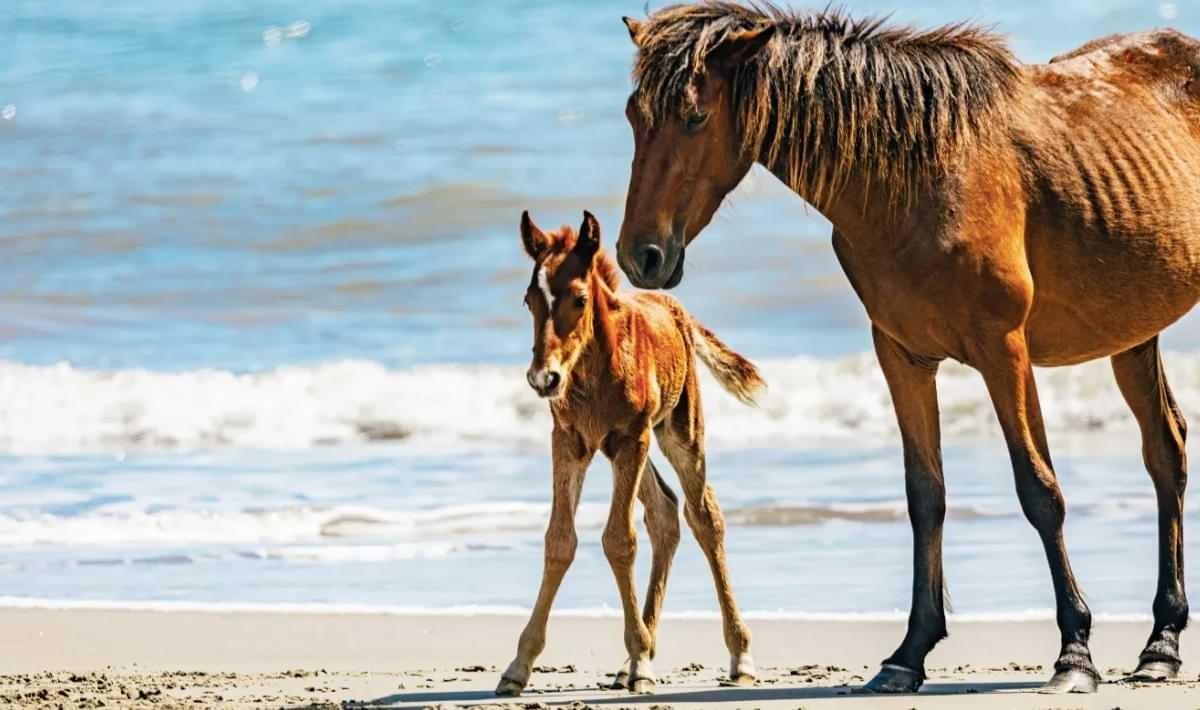
The Corolla horses are not ordinary domestic horses released into the wild. They are part of the rare Colonial Spanish Mustang lineage and carry physical characteristics very different from modern horse breeds.
A few things that make them unique:
- Smaller stature, usually standing between 12 and 14 hands high.
- Curved ear tips.
- Narrow V-shaped chests.
- Low-set tails.
- Slight skeletal differences compared to modern horses.
Their behavior is fascinating, too. The horses live in small family groups called harems, usually led by one dominant stallion and several mares. Younger males without harems often gather into separate bachelor groups.
The herd adapted so well to coastal survival over the centuries that, beyond learning how to navigate the difficult weather conditions of the Outer Banks, they even learned how to sense storms. Fascinating, isn't it?
Places to Learn More About Corolla's Famous Wild Horses
Want to understand the horses beyond the photos? Make some time for the Corolla Wild Horse Fund Museum before your beach excursion.
Located in Historic Corolla Village, the museum explains:
- The horses' Spanish origins.
- Conservation efforts.
- Rescue programs.
- Threats facing the herd.
- The history of wild horses in Corolla.
During summer, some visitors staying longer also head to the Betsy Dowdy Equine Center in Grandy for "Mustang Mornings," where rescued horses undergoing rehabilitation can sometimes be seen.
How to Protect the Horses While Watching Them
This part matters a lot. The Corolla herd currently numbers around only 100 horses, which makes conservation incredibly important.
A few important rules visitors should always follow (I've mentioned most of them above under "Legal and Safety Rules," but reinforcing them is essential):
- Stay at least 50 feet away from the horses at all times. This is legally required.
- Never feed the horses - not even apples or carrots. Their digestive systems are adapted specifically to native coastal vegetation, and human food can actually be fatal.
- Drive very carefully on the 4WD beaches. Vehicle collisions remain one of the biggest dangers to the herd, particularly during busy summer weeks.
- Secure trash lids properly if you're staying in a vacation rental inside the off-road area. Horses sometimes investigate garbage around homes, which can be dangerous for them.
Beyond Corolla: Other Wild Horses Around Coastal North Carolina
Corolla may be the most famous location, but it is not the only place where wild horses live along the North Carolina coast.
Other herds can also be found around:
- Shackleford Banks.
- Ocracoke Island.
- Rachel Carson Reserve.
Each location offers a slightly different experience, but Corolla is the easiest and most iconic place for summer OBX visitors to see wild horses in their natural coastal habitat.
And once you finally spot one standing beside the dunes with the Atlantic stretching behind it, you'll understand why they're considered some of the most iconic sights in the OBX.
Make Your Way to the OBX
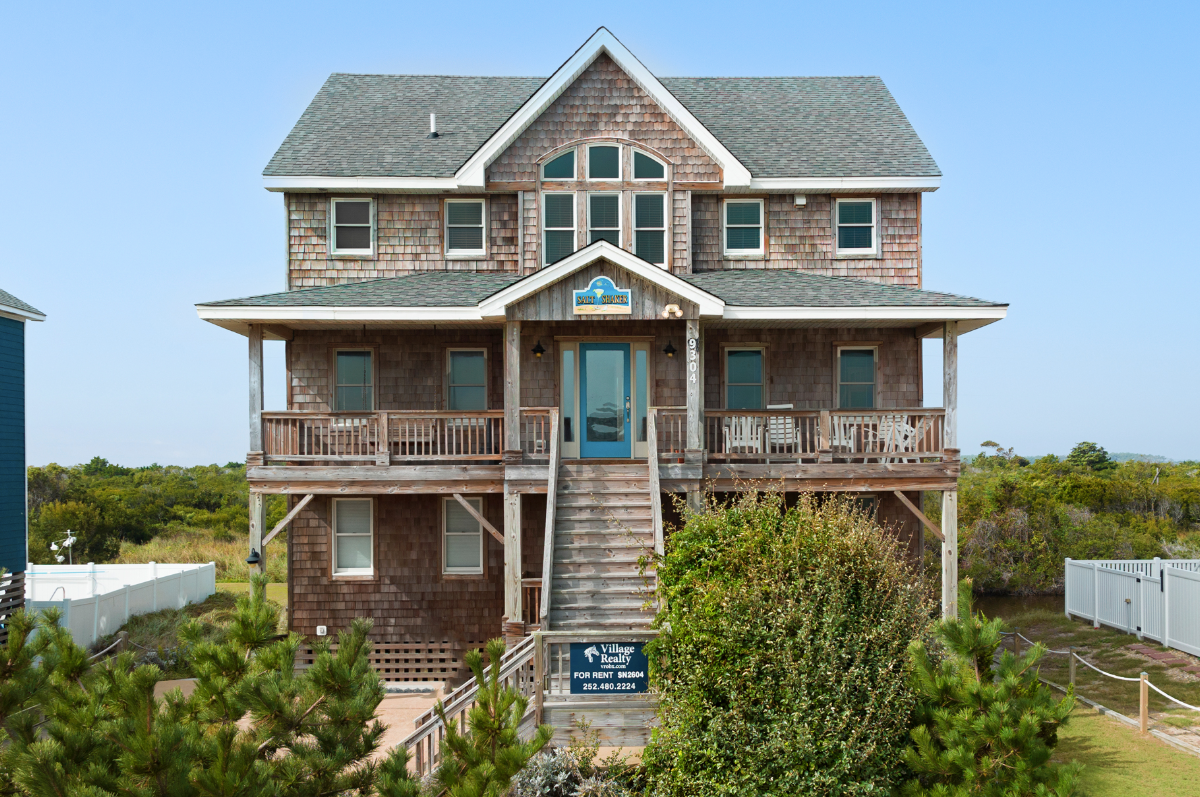
The secret to a great OBX getaway? Finding the perfect place to stay. With Village Realty OBX, you'll have your pick of vacation rentals that keep you close to the beach, the fun, and everything in between.
Our rentals range from oceanfront homes with stunning views to cozy cottages perfect for families or couples. Many properties include amenities like private pools, hot tubs, and fully equipped kitchens, ensuring your stay is as relaxing as it is adventurous.
Booking with Village Realty, you can focus on enjoying the best of the Outer Banks while settling into a vacation home tailored to different travel styles and group sizes. Start your journey by choosing the perfect rental for your outdoor getaway today!